A New Wiper Malware Hits the Energy Sector
Cybersecurity researchers at Kaspersky have publicly disclosed a previously unknown malware strain called Lotus Wiper, used in a series of destructive cyberattacks targeting Venezuela's energy and utilities sector in late 2025 and early 2026. The malware is classified as a data wiper, a category of attack tool designed not to extort victims, but to permanently destroy data and render systems inoperable. According to Kaspersky's findings, two batch scripts serve as the initial mechanism for triggering the wipe, pointing to a deliberate, operationally planned intrusion rather than opportunistic malware deployment.
Wiper campaigns of this nature are typically associated with state-sponsored or geopolitically motivated threat actors. Whether this campaign represents nation-state aggression, hacktivism, or a contracted disruption operation, the operational outcome is the same: an energy provider's data was erased, and systems were taken offline. The attack underscores a hardening trend in offensive cyber operations, when disruption is the goal, ransomware's profit motive gives way to pure destruction.
Why Wiper Malware Is More Dangerous Than Ransomware
Most small businesses and healthcare practices have been conditioned to think about ransomware as the primary catastrophic threat, you get encrypted, you pay or restore from backup. Wiper malware operates on a different doctrine entirely. There is no decryption key to purchase, no negotiation channel to open. The data is gone. Systems can be reduced to unusable states in minutes, and recovery depends entirely on whether offline, air-gapped backups exist and how recently they were verified.
The Lotus Wiper campaign also highlights the risk of critical infrastructure dependency. For healthcare practices, tax firms, and small businesses that rely on regional utilities or cloud infrastructure anchored to physical data centers, attacks on energy providers are not an abstract geopolitical concern. A sustained outage at the grid level creates downstream operational disruptions, loss of connectivity, HVAC failures in server rooms, generator failures under prolonged load, that ripple into organizations with no direct connection to the original target.
The use of batch scripts as the initial trigger mechanism is worth flagging for defenders. Batch files are a low-complexity, native Windows tool. When execution is unrestricted on endpoints and email or removable media can deliver them freely, even unsophisticated delivery of a wiper payload becomes viable. This is not an exotic attack chain requiring zero-days, it is a disciplined process executed against an environment with insufficient controls.
Key Takeaway: Your Backups Are Your Last Line of Defense Against Wipers
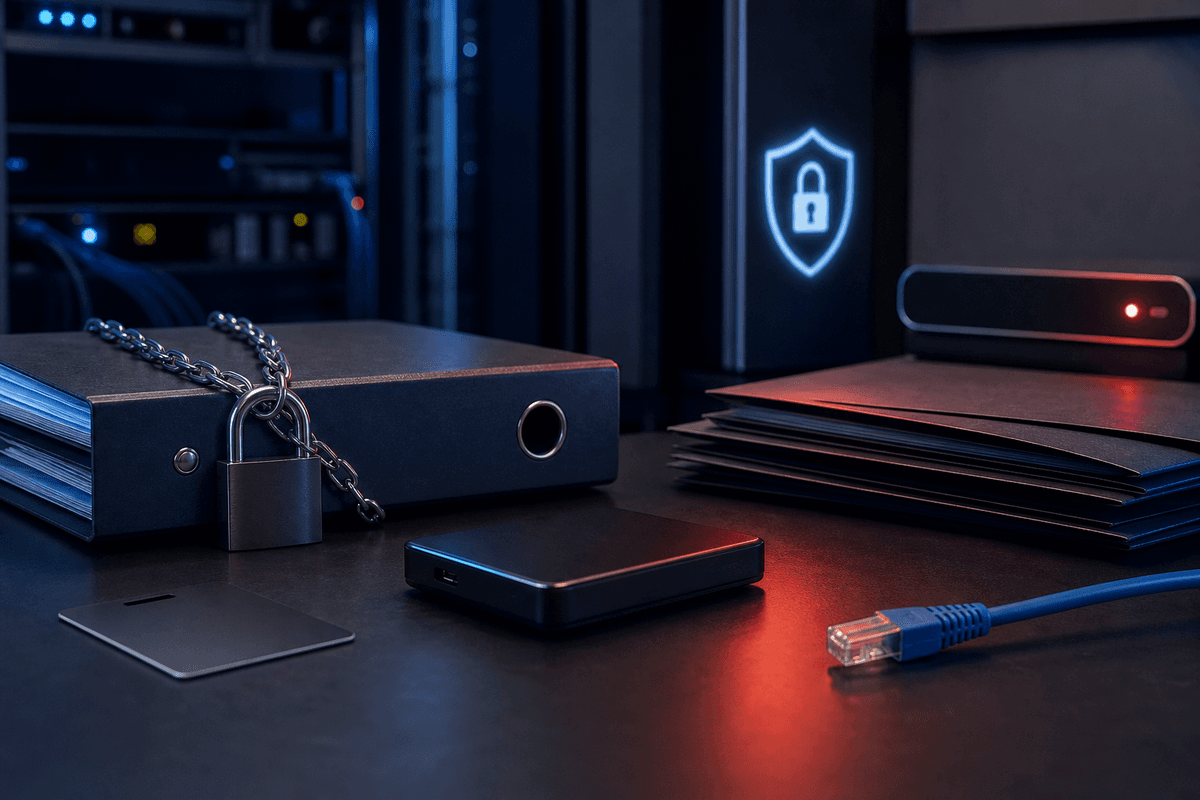
Unlike ransomware, wiper malware cannot be negotiated with. If Lotus Wiper or a similar tool reaches your environment, the only recovery path is a verified, offline backup. Test your backup restoration process now, not after an incident. A backup you have never tested is not a backup, it is an assumption. Ensure at least one copy of critical data is stored offline or air-gapped, and confirm your recovery time objective (RTO) is realistic for your practice or business continuity needs.
What This Means For Your Business
For healthcare practices operating under HIPAA, a wiper event that destroys patient records or billing data carries dual consequences: operational shutdown and potential breach notification obligations depending on how data was stored and what was lost. Tax professionals holding client financial records face similar exposure under IRS data security requirements and FTC Safeguards Rule obligations. In both cases, the regulatory question is not just whether you can recover, but whether you can demonstrate you had reasonable safeguards in place before the event.
Here are the most important defensive steps to prioritize right now:
- Restrict script execution on endpoints. Use Windows Group Policy or your EDR (endpoint detection and response) platform to block or alert on the execution of batch scripts (.bat,.cmd) from user-writable directories. Lotus Wiper's trigger mechanism relies on these running without friction.
- Enforce application allowlisting where feasible. On high-value systems, practice management servers, tax software workstations, accounting machines, only allow explicitly approved applications to execute. This single control would neutralize the majority of wiper delivery mechanisms.
- Audit your backup architecture today. Confirm backups are occurring on schedule, that at least one copy is stored offline or immutably (cloud versioning with deletion protection counts), and that you have actually performed a restoration test in the past 90 days.
- Segment your network. If one endpoint is compromised, wiper malware should not be able to traverse freely to file servers, backup appliances, or adjacent workstations. VLAN segmentation and enforced least-privilege access controls limit lateral movement dramatically.
- Monitor for mass file deletion events. A wiper's operational signature is high-volume, rapid file deletion or overwrite activity. Modern EDR and SIEM tools can be tuned to alert on this behavior in near real-time, providing a small but critical window to isolate affected systems before the damage is complete.
The Lotus Wiper campaign is a reminder that destructive cyber operations are not limited to nation-state infrastructure targets in distant conflicts. The techniques transfer. The tools proliferate. The obligation to maintain resilient systems and verified recovery capabilities belongs to every organization, regardless of size, sector, or geography.
See whether the service fits
Choose a security approach that fits the way you already work
Start with the outcome and scope. A good fit is clear about who it is for, what is covered, how implementation works, and what happens when the service detects a problem.
People also look for
Keep exploring Ransomware & recovery
Reduce the chance of an infection, limit its reach, and make recovery possible without improvising under pressure.
- Common question: what is ransomwareUnderstand how ransomware worksLearn how attacks begin, spread, encrypt data, and pressure victims.
- Common question: ransomware protection for small businessProtect a small business from ransomwareCoordinate endpoint detection, access control, backups, and response planning.
- Common question: 3-2-1 backup strategyBuild recoverable backupsKeep multiple protected copies and verify that important systems can actually be restored.
- Common question: ransomware recovery planUse the ransomware protection guidePlan prevention, containment, restoration, and communication before an incident.
- Common question: healthcare ransomware preventionReduce ransomware risk in healthcareProtect clinical operations, patient records, and recovery capability.